Sensory Overload after a braininjury in multiple languages.
Sensory Overstimulation
Sensory hypersensitivity
We would like to explain something about sensory overstimulation / sensory hypersensitivity /sensory overload after braininjury / Acquired Brain Injury in as many languages as possible.
Choose the language that suits you best from the menu below:






















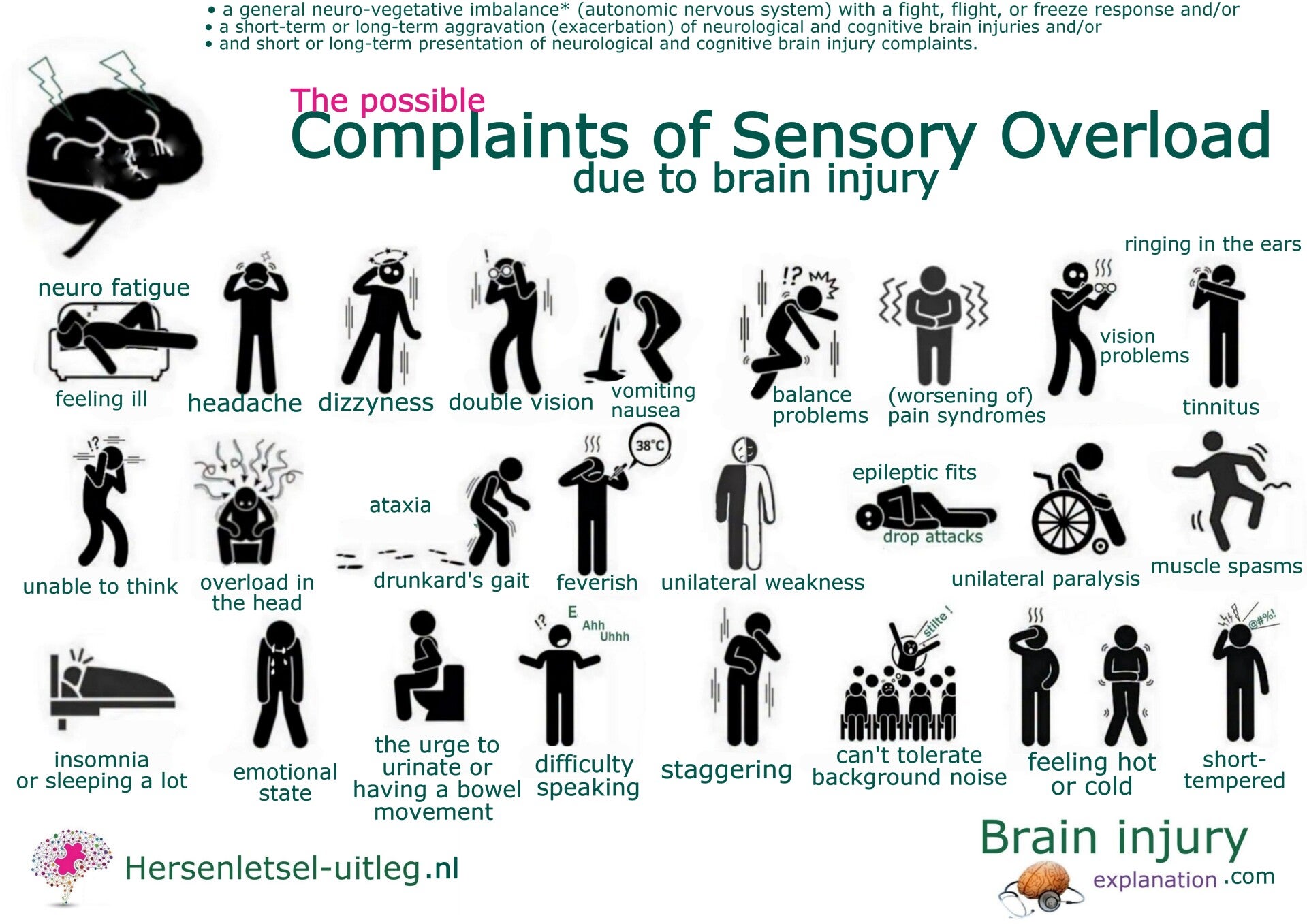
Sensory overload following brain injury may result in paroxysmal neurological and cognitive symptoms. These may represent a temporary worsening of existing symptoms or the temporary emergence of symptoms that were previously absent or not noticeable. Examples include transient weakness, speech difficulties, balance disturbances, or cognitive dysfunction. However, any new acute neurological deficit should always prompt evaluation to exclude a new cerebrovascular event, such as a stroke.
!! New or sudden neurological symptoms should always be medically assessed to exclude other causes, such as a new stroke.!
The image below shows all the (possible) symptoms resulting from sensory overload that were identified in our scientific research
Research
The results of our scientific research are published. A translation will follow soon.
DEFINITION
Based on the research the definition of ‘Overstimulation due to Brain Injury’ has been further refined. This has resulted in the following definition:
Sensory Overstimulation due to brain injury is a condition characterised by an exhausting situation of neurological origin, which arises when more cognitive, emotional and sensory (including proprioceptive and vestibular) information (in the form of stimuli) is received than the brain can process.
This can result in:
- general neurovegetative imbalance* (autonomic nervous system) involving a fight, flight or freeze response and/or
- a short-term or long-term aggravation / exacerbation of neurological and cognitive brain injury symptoms and/or
- a short-term or long-term manifestation of neurological and cognitive brain injury symptoms.
There may be single complaints or combinations of neurovegetative, neurological, cognitive or emotional brain injury complaints
The severity of the complaints can fluctuate depending on the number of stimuli and whether or not stacked stimuli and varying daily energy. The severity of the complaints can differ individually and can be influenced by the location and severity of the brain injury, general physical and mental condition, personality characteristics, developmental or anxiety disorders and in particular also additional disorders of the senses, which may or may not develop acutely or develop slowly and for example medication use.
.
* definition of neuro-vegetative complaints = symptoms of the disease that can arise when the nervous system that independently (unwillingly) takes care of the control of various organs is disrupted.
In 2019, we received the Gold medal of honor for particularly good work for people with brain injuries.
